

Caesars Entertainment posted second-quarter 2026 net revenues of $3 billion – up from $2.9 billion a year earlier – as a 9.4% regional surge offset a softening Las Vegas Strip and the company released results via press release only, foregoing its customary analyst call ahead of its pending $17.6 billion all-cash acquisition by Fertitta Entertainment.
Las Vegas generated $1.01 billion in Q2 revenue, down 3.5% from $1.05 billion in the prior-year period. Regional properties rose to $1.57 billion from $1.43 billion. Gaming revenue drove the consolidated gain, climbing to $1.75 billion from $1.66 billion, while hotel and food and beverage revenues recorded slight declines.
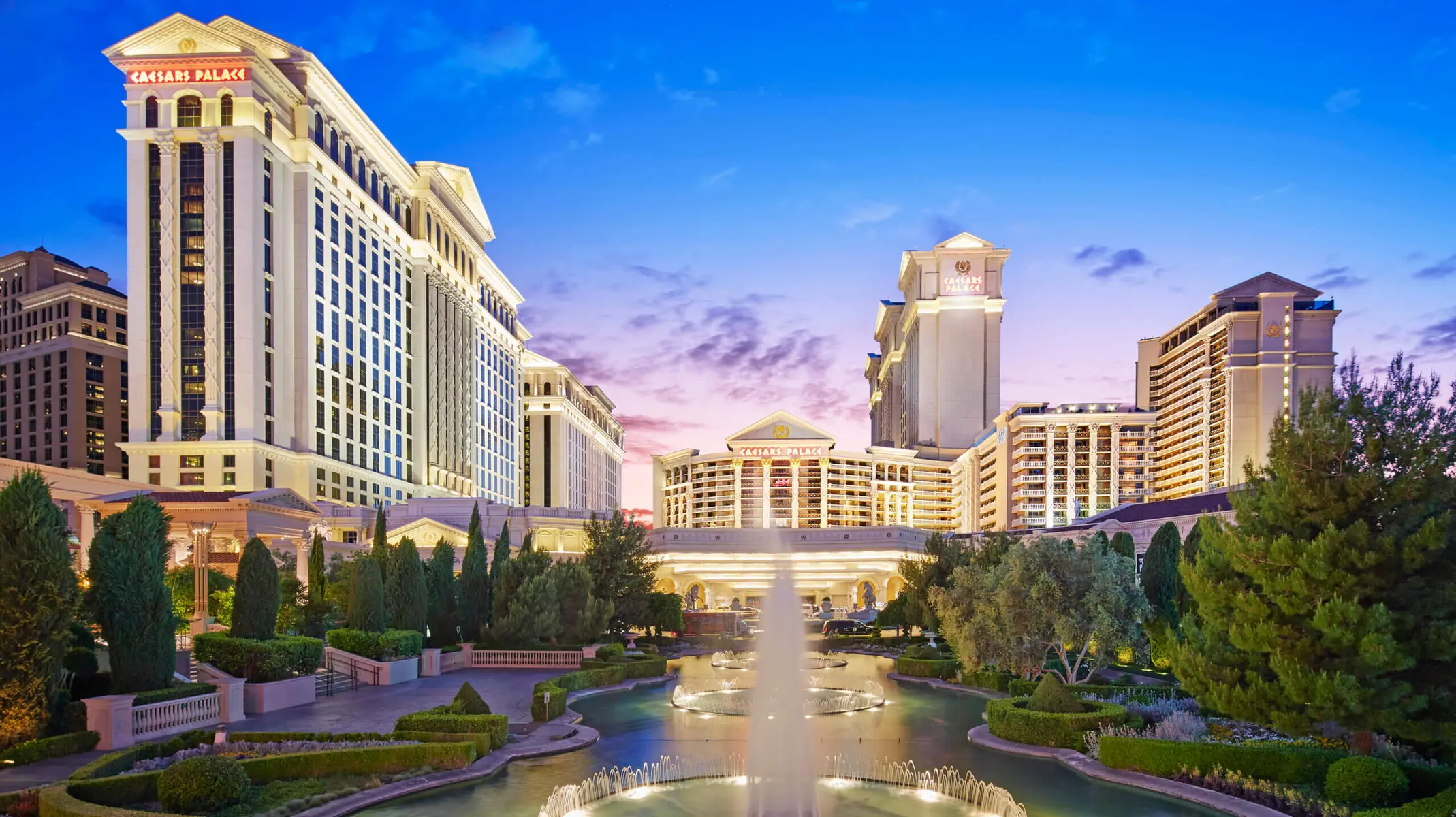
Consolidated adjusted EBITDA came in at $920 million, below the $955 million posted a year ago. Las Vegas EBITDA dropped 12.6% to $410 million, while regional EBITDA advanced 11.2% to $488 million. Caesars Digital contributed $351 million in revenue, up 2.3%, though its adjusted EBITDA fell to $68 million from $80 million.
Strip Underperformance and the Analyst Take
Barry Jonas of Truist Securities said the results matched the firm’s preview – regionals as a bright spot, the Strip soft – and noted Caesars appeared to have lost market share on the Strip based on hold and occupancy metrics. Table hold of 16.6% was the first reading below 17% since Q4 2022, and table drop of $706 million fell 5% against a market that was up 1% over the same period.
Hotel occupancy of 95.5% was down 130 basis points year-over-year while the broader Strip market was flat. Jonas attributed the weakness to lower city-wide leisure visitation rather than a structural issue, and said buy-rated MGM Resorts International and Wynn Las Vegas may have fared better given what he characterised as Caesars market-share losses. Jonas said the $920 million EBITDA figure came in below consensus, though net revenue was in line with his estimate and positive to consensus.
The regional outperformance was partly attributed to the consolidation of Caesars Windsor in March, a boost from a major bowling tournament in Reno, and capital investment returns at Lake Tahoe and New Orleans. Jonas said regional margins held at 31.1%, up 50 basis points year-over-year, though higher labour costs and gaming taxes offset revenue gains. His commentary also pointed to positive implications for other regional-heavy operators, citing Penn Entertainment and Churchill Downs. Pennsylvania’s gaming market has itself shown strength in 2026, with the state recording record revenue figures that underpin the regional demand thesis.
Fertitta Deal and What Comes Next
Caesars said the transaction is expected to close next spring, after which the company will delist from Nasdaq and become a private entity. Nevada regulators have already reviewed the integration plans, with counsel for Fertitta telling the board that Caesars’ existing executive and management team will run day-to-day operations and the current board of directors will be replaced by a board of managers composed of Fertitta executives.

Daniel Politzer of J.P. Morgan flagged the overlap between Fertitta’s seven Golden Nugget casinos and Caesars properties in markets including Atlantic City, Biloxi, Lake Charles, Laughlin, Lake Tahoe, and Las Vegas. Politzer estimated potential wholly owned divestitures – including Circus Circus Reno, Eldorado Reno, Horseshoe Lake Charles, Golden Nugget Atlantic City, and possibly a Las Vegas property – could net approximately $2.3 billion in proceeds. As of June 30, Caesars carried $11.8 billion in aggregate principal debt, with cash and equivalents of $965 million excluding restricted cash of $112 million.
Source: CDC Gaming

Petra Vanhoof has spent the better part of a decade following the shifting tides of gambling regulation across Europe and beyond. She came up through the compliance side of the industry before pivoting to writing, which gives her a grounded, no-nonsense perspective on the rules, loopholes, and political maneuvering that shape how operators actually do business. She is particularly drawn to the gap between what regulators say and what the market ends up doing in response.