
Online Casino Philippines 2026: Top 10 Real Money Sites Reviewed
Looking for the best online casino Philippines players can enjoy in 2026? Compare the top real money sites below, with their games, bonuses and payment options side by side, then read our guide to baccarat, slots, live tables and more.

288% Welcome Pack Bonus up to 28,800 PHP
288% Welcome Pack Bonus up to 28,800 PHP
- Games powered by top providers like NetEnt, Habanero, Red Tiger, and others
- Register via Telegram, Google or WhatsApp
- Support Bitcoin and USDT payments


Welcome package up to 95,000 PHP + 150 FS
Welcome package up to 95,000 PHP + 150 FS
- Includes bonus games such as Lottery and Wheel of Fortune
- Official 1xbet Telegram channel
- Mobile app available for both iOS and Android users

Welcome casino - 21.000 PHP + 170 FS
Welcome casino - 21.000 PHP + 170 FS
- Lightning-fast payouts
- Boosted odds & free bets
- Live dealers & top leagues

Welcome Bonus Pack 300% up to PHP 18,888
Welcome Bonus Pack 300% up to PHP 18,888
- Slots, instant games, live dealers, sport - all on 1 platform
- Instant deposits and payouts
- Main local payment methods

24.000 PHP + 150 FS
24.000 PHP + 150 FS
- Boosted odds, bet builder & casino slots
- Limited-time bonus boosts
- High-limit live tables & tasks

100% Welcome Bonus
100% Welcome Bonus
- Sportsbook with thousands of pre-match and live betting markets
- Fast registration and convenient payment methods
- Competitive odds across major sports and esports


Great Offers for Sports & Casino
Great Offers for Sports & Casino
- Game Universe with live & instant play variety
- Interactive rewards system with coins & in-house shop
- Deep, multi-level VIP & loyalty experience
Finding a legitimate online casino in the Philippines takes more than a quick search. Hundreds of websites target Filipino players, but only platforms authorised by PAGCOR may lawfully offer casino games to people in the country, and the gap between a supervised platform and an unlicensed one shows up exactly when you try to withdraw, complain or close your account. The market has also changed sharply since 2024, with offshore gaming banned outright and e-wallets told to cut their in-app gambling links.
In this guide you will find what a legally operating online casino in the Philippines looks like, how to vet a platform before putting money in, how the main games and their house edges function, how payments and verification are handled at supervised platforms, and what the regulatory changes since 2024 mean for players. This is an informational guide: it neither ranks nor recommends offshore sites, and gambling in the Philippines requires you to be 21 or older.
Top 10 Online Casino Philippines – 2026 Rankings
Before comparing any list of sites, it helps to know which kinds of online gaming are actually allowed for players in the Philippines and who supervises each one. The table below sets out the main categories and their status. Use it as the first filter: a platform that does not fit one of the permitted rows is not a lawful option, however high it appears in a ranking.
| Product | Who supervises it | Status for players in the Philippines |
|---|---|---|
| Electronic casino games (eCasino) | PAGCOR, Electronic Gaming Licensing Department (EGLD) | Permitted on online platforms tied to PAGCOR-licensed gaming venues |
| Electronic bingo and traditional bingo | PAGCOR (EGLD) | Permitted through PAGCOR licensees |
| Sports betting, specialty games, online poker, numeric games | PAGCOR (EGLD) | Permitted through PAGCOR licensees |
| Land-based casinos and integrated resorts | PAGCOR (casino licensing and its own Casino Filipino branches) | Permitted, entry restricted to adults aged 21 and over |
| Lotto and sweepstakes | Philippine Charity Sweepstakes Office (PCSO) | Permitted through PCSO channels |
| Electronic sabong (online cockfight betting) | Suspended nationwide | Not permitted under Executive Order No. 9 (2022) |
| Offshore gaming (POGOs and internet gaming licensees) | Banned | Prohibited under Executive Order No. 74 (2024) and the Anti-POGO Act of 2025 |
| Foreign-licensed sites (for example Curaçao or Anjouan) | Not authorised by PAGCOR | Not authorised to serve players in the Philippines |
The legal basis for PAGCOR’s role is its charter, Presidential Decree No. 1869 as amended by Republic Act No. 9487, which gives it the authority to operate and license gambling within Philippine territory. PAGCOR’s Electronic Gaming Licensing Department describes how online platforms must be connected to a PAGCOR-licensed gaming venue and how their game systems are approved before they go live.
What to Check Before You Deposit at Any Philippine Online Casino
Most players open an account and deposit before doing any verification. The checklist below takes a few minutes and covers the checks that separate a supervised platform from one that will cause problems at cashout.
| What to Check | Why It Matters |
|---|---|
| Domain on PAGCOR’s published list | PAGCOR publishes the registered brands and domain names of its licensees. If the exact web address you are on is not listed, treat the site as unlicensed and do not deposit. |
| PAGCOR security seal | PAGCOR runs an online verification system for its security seals. A seal that cannot be verified there is a warning sign, not proof of a licence. |
| PHP currency account | Avoids foreign exchange fees on deposits and withdrawals. A platform that only runs accounts in foreign currency or crypto is unlikely to be a domestic licensee. |
| KYC process documented | Licensed operators must verify your identity and age. Platforms that skip KYC entirely are a red flag, not a convenience. |
| Age gate at 21 | PAGCOR bars persons under 21 from playing. A site that accepts younger players is not following PAGCOR rules. |
| Clear terms in English or Filipino | Withdrawal rules, bonus conditions and account closure terms should be published in full before you sign up, with a named company behind them. |
| RTP visible on games | Either in the game’s information panel or in the lobby. Approved game content comes from providers whose systems PAGCOR has accredited. |
| Responsible gambling tools available | PAGCOR’s Responsible Gaming Code of Practice applies to gaming establishments and online platforms. Look for deposit limits, time limits and a route to self-exclusion. |
The single most important check is the domain. Compare the web address in your browser, character by character, with PAGCOR’s list of registered brands and domain names of licensed casinos. Copycat sites often use a name one letter away from a real brand. A logo in the footer means nothing without a matching entry on PAGCOR’s own documents.
Top 5 Online Casino Philippines – Detailed Reviews
Rather than reviewing individual offshore brands, which are not authorised to serve players in the Philippines, this section reviews the five areas that decide whether an online casino in the Philippines is operating lawfully and whether your money is protected. These are the same points any reliable review should cover before a platform is called safe.
Online Casino Philippines Operators Under PAGCOR’s Electronic Gaming Rules
PAGCOR regulates all games of chance and issues licences for gaming operations within Philippine territory. Apart from land-based casinos, its Electronic Gaming Licensing Department is the regulatory arm for local operations offering traditional bingo, electronic bingo, electronic casino games, sports betting, specialty games, online poker and numeric games. These are onsite operations at PAGCOR-licensed gaming venues together with the online platforms connected to them.
This structure matters for players. A lawful online casino in the Philippines is not a free-floating website: it sits behind a licensed venue operator, runs on a gaming system that PAGCOR has approved, and uses game content that has been evaluated before deployment. Service providers that supply those platforms also need PAGCOR accreditation and a presence in the country.
The practical consequence is accountability. If a dispute arises over a withdrawal, a voided bet or a closed account, a domestic licensee answers to a regulator that can investigate, sanction and revoke. An offshore site answers to nobody in the Philippines, and a player has no local authority to turn to.
| Regulator | Philippine Amusement and Gaming Corporation (PAGCOR) |
| Legal basis | Presidential Decree No. 1869, as amended by Republic Act No. 9487 |
| Online products | eCasino, eBingo, sports betting, specialty games, online poker, numeric games |
| Minimum age | 21 |
| Where to verify | PAGCOR regulatory site: registered brands and domain names, accredited gaming system administrators, security seal verification |
| Player protection rules | Responsible Gaming Code of Practice, self and family exclusion |
What a PAGCOR licence gives you
- A regulator in the Philippines that can act on complaints
- Game systems and content approved before they go live
- Mandatory identity and age checks
- Access to PAGCOR’s exclusion programme
What it does not do
- It does not change the house edge: every game is still built to return less than you stake over time
- It does not make bonus terms generous; you still need to read them
Online Casino Philippines Domain Checks: Using PAGCOR’s Published Lists
PAGCOR’s regulatory site publishes several documents that let you check a platform yourself. The most useful for players are the list of registered brands and domain names of licensed casinos and the list of PAGCOR-accredited gaming system administrators with their registered domain names. Both are linked from the Electronic Gaming Licensing page and are updated as brands are added or removed.
Use them in three steps. First, type the web address yourself rather than following an ad, a chat message or a social media link. Second, find the brand on the list and confirm that the exact domain matches. Third, check any security seal on the site through PAGCOR’s security seal verification page.
If any of the three checks fails, stop. Fake domains that copy the look of a real licensee are common, and money sent to them is very hard to recover. A platform that tells you to use a mirror link, a Telegram bot or a personal bank account for deposits is not behaving like a licensee.
| Check 1 | Type the address yourself; avoid links from ads and messages |
| Check 2 | Match the brand and exact domain on PAGCOR’s published list |
| Check 3 | Verify the security seal on PAGCOR’s own verification page |
| Red flag | Deposits to personal accounts, mirror links, no KYC, no named operator |
Online Casino Philippines and Offshore Sites: Why Curaçao Brands Are Not an Option
Many sites that advertise to Filipino players hold only a foreign licence, typically from Curaçao or Anjouan. Those licences are issued abroad and give no authority to offer gambling to people in the Philippines. PAGCOR’s charter covers gambling within Philippine territory, and Executive Order No. 13 (2017) declared gambling activities conducted beyond the territorial jurisdiction of the authority that issued the licence to be unlawful.
For a player, the risk is practical as much as legal. A foreign-licensed site is not on PAGCOR’s lists, is not covered by the Responsible Gaming Code of Practice, does not take part in PAGCOR’s exclusion programme and cannot be pursued through a Philippine regulator if it refuses a withdrawal. Disputes are left to a foreign body, if there is one at all.
This page therefore covers PAGCOR-supervised platforms only. If you see a site described as “legal for Filipinos” elsewhere, you can confirm the claim in a minute against PAGCOR’s published lists.
Common offshore warning signs
- Licence from Curaçao, Anjouan or an unnamed “international” authority only
- Crypto-first cashier and “no verification” marketing
- App downloads only through APK files or links sent by chat
- Very large bonus headlines with terms that are hard to find
Online Casino Philippines Player Protections: KYC, Age 21 and Exclusion
PAGCOR’s responsible gaming rules prohibit persons under 21 from entering and playing at gaming establishments, along with government officials and employees, members of the armed forces and police, persons on the National Database of Restricted Persons and employees of licensees. Online platforms enforce the age rule through identity verification at sign-up.
PAGCOR also runs a self-exclusion and family exclusion programme. A player can ask to be excluded, and close family members can apply to have a relative excluded, using the forms on PAGCOR’s responsible gaming page. PAGCOR publishes regular data on player exclusions on its regulatory site.
Verification usually needs a government-issued photo ID such as a PhilSys national ID, driver’s licence or passport, and often a selfie holding the document. It protects minors, keeps excluded people out and is part of the anti-money laundering checks licensees must run. It is a sign that the platform is following the rules, not an obstacle.
Online Casino Philippines Payments After the BSP E-Wallet Order
On 14 August 2025 the Bangko Sentral ng Pilipinas ordered the e-wallets it supervises to remove in-app links and icons to online gambling platforms within 48 hours. GCash and Maya said they would comply. The order covered the gaming shortcuts inside the apps, not every payment to a licensed operator, and press coverage at the time noted that tighter restrictions on licensed operators were still under study.
What this means in practice: payment options at online casinos in the Philippines can change at short notice, and the cashier of a supervised platform is the place to confirm which methods are currently available. Use only payment channels that are supervised by the BSP and in your own name. Never send money to a personal account or to an agent who offers to “top up” your casino balance.
Online Casino Games in the Philippines – Full Category Guide
The sections below cover the main game categories found on Philippine online casino platforms: how each one works and what the house edge looks like in practice. Knowing these figures before you start is the most direct way to understand what a session is likely to cost.

Baccarat – Rules, Bet Types, and Why It Dominates the Philippine Market
Baccarat is one of the best-known casino games in the Philippines and a fixture of the integrated resorts in Entertainment City. Two hands are dealt, Player and Banker, and you bet on which finishes closer to nine, or on a Tie. Face cards and tens count as zero. Aces count as one. Cards two through nine are face value.
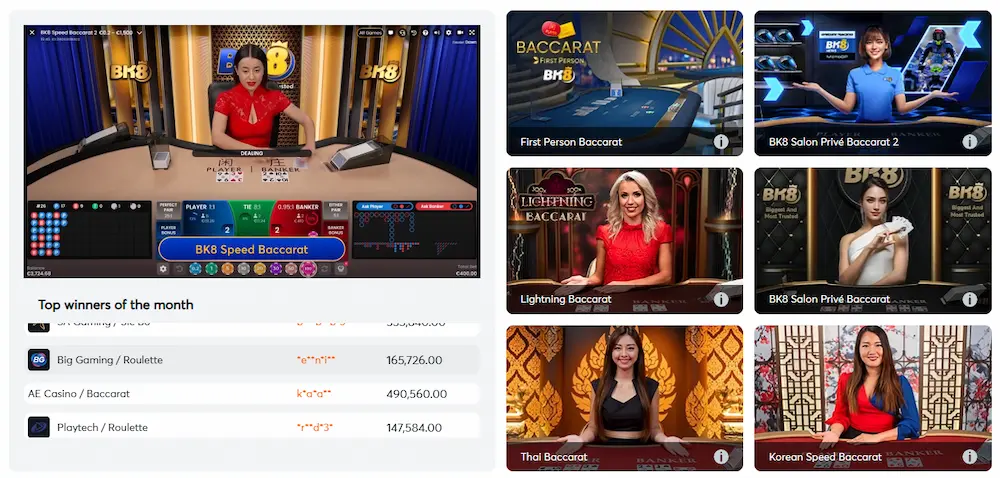
In the standard eight-deck game with 5% commission, the Banker bet carries a house edge of about 1.06% and the Player bet about 1.24%. The Tie usually pays 8:1 and carries a house edge of around 14.4%, which makes it the most expensive bet on the table. Check the paytable of the exact table you join, because commission-free and side-bet variants change these numbers.
Common baccarat variants include Speed Baccarat (shorter rounds), No Commission Baccarat (the Banker bet pays reduced odds on certain winning totals instead of charging commission), multiplier versions such as Lightning Baccarat, and Dragon Tiger, a simplified one-card format. Faster formats mean more hands per hour, and more hands means more of your budget is exposed to the house edge.
Online Slots – RTP, Volatility, and Which Titles Filipino Players Play Most
Slots are the largest game category by title count on most platforms. The two numbers that determine whether a slot fits your session are RTP (Return to Player) and volatility.
RTP is the theoretical percentage returned to all players over a very large number of spins. A slot with 96.5% RTP returns PHP 96.50 per PHP 100 wagered over the long run, which means the expected cost is PHP 3.50 per PHP 100 staked. Volatility describes how that return is distributed: low volatility means frequent small wins, high volatility means rare large payouts and long losing runs. For a small fixed budget, lower volatility makes the money last longer, but no setting changes the long-run cost.
Titles from providers such as Pragmatic Play (for example Gates of Olympus) and PG Soft (for example Mahjong Ways) are widely played across Southeast Asia. Some games are released in several RTP versions, so always open the game’s information panel on the platform you are using and read the RTP shown there rather than relying on a figure quoted elsewhere.
Blackjack – The Lowest House Edge Game in the Casino
Blackjack receives less attention than baccarat in the Philippine market, which is worth reconsidering. Played with basic strategy under common rules, blackjack carries a house edge of around 0.5%, lower than most other standard casino games. At PHP 100 per hand, the expected cost of a blackjack session is lower than an equivalent session at most other tables.
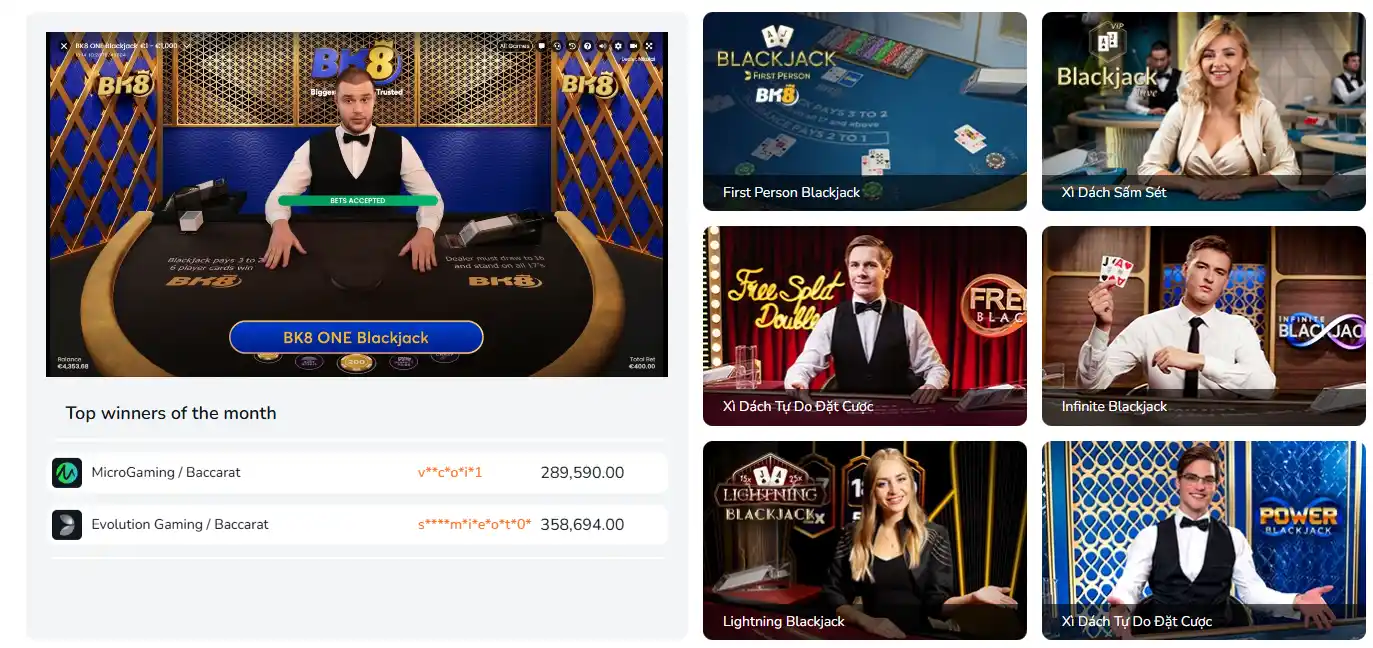
Basic strategy covers the mathematically correct play for every hand combination. You do not need to memorise it; you can keep a basic strategy chart open alongside the game. The core rules are: stand on hard 17 or above, double down on 11 and on 10 against a weaker dealer card, always split aces and eights, and never take insurance.
The rules printed on the table change the edge. Tables that pay 3:2 on blackjack are better for the player than tables paying 6:5, and tables where the dealer stands on soft 17 are better than those where the dealer hits soft 17, which adds roughly 0.2% to the house edge. Read the rules panel before you sit down.
Live Dealer Casino – Evolution Gaming, Asia Gaming, and Ezugi Explained
Live dealer games stream a real human dealer from a studio directly to your screen. You place bets through the interface, watch the game unfold in real time, and receive payouts automatically. The experience is closer to a physical casino than any RNG game without requiring a trip to Entertainment City.
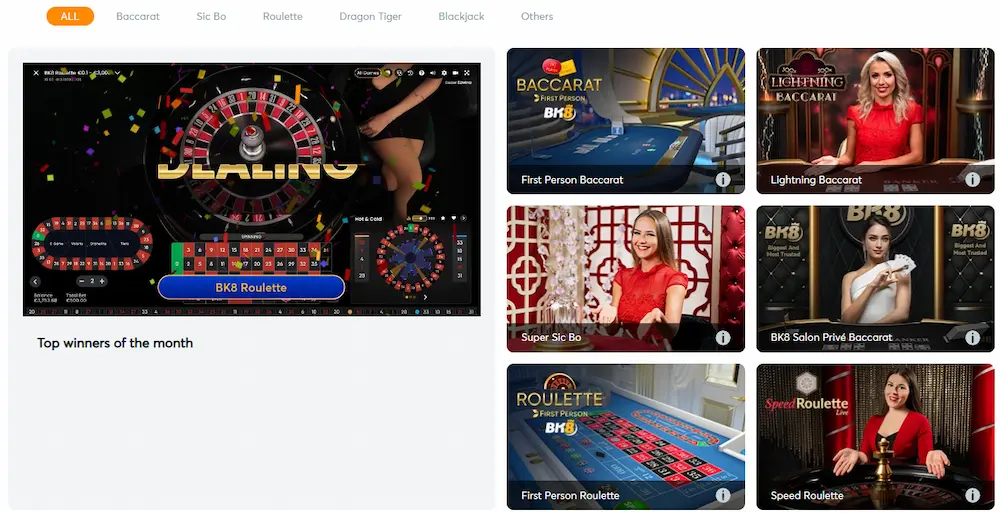
Three studio names come up most often in Southeast Asia: Evolution Gaming, Asia Gaming, and Ezugi. Evolution runs a large global live studio network with formats such as Speed Baccarat, Lightning Roulette, Crazy Time and Infinite Blackjack. Asia Gaming focuses on formats popular across the region, including Dragon Tiger, Fan Tan, Sic Bo and Baccarat Squeeze. Ezugi supplies a further live catalogue.
On a PAGCOR-supervised platform, live content must come from a provider whose system and games PAGCOR has approved; its regulatory site lists application kits for several live studios. Table limits vary by platform and table, so check the minimum and maximum bet before you join, and remember that the house edge on live tables is the same as on the equivalent RNG game.
Crash Games – How Aviator Works and Why It Grew So Fast
Crash games have become a widely played category in recent years. Aviator from Spribe is the best-known title. A multiplier starts at 1x and climbs continuously. Players cash out at any point while the multiplier is rising. If the plane flies away before you cash out, the bet is lost. The theoretical RTP is published by the provider in the game’s rules panel.

The risk in crash games is not the RTP, it is the speed. Rounds complete in seconds, and a session budget can disappear faster than in almost any other format if you are not managing bet size and cash-out timing deliberately. Plinko-style games offer a slower alternative: a ball drops through a peg board onto multiplier slots, and the player chooses a risk level that changes how the multipliers are spread. Setting a loss limit before you start is especially important with these fast formats.
Fishing Games, e-Bingo, and Sabong – Games Built for the Philippine Market
Three game categories are closely tied to the Philippine and wider Southeast Asian market, and their legal status differs.
Fishing games put players at a cannon targeting fish and sea creatures for multiplier payouts. Each species carries a different point value, and special characters award larger multipliers. Providers such as JILI and CQ9 are known for these titles. As with slots, the RTP is set by the game and should be shown in its information panel.

e-Bingo is one of the products PAGCOR’s Electronic Gaming Licensing Department supervises, alongside traditional bingo. Online versions follow 75-ball or 90-ball formats with faster rounds and automatic number marking. Keno-style numeric games run on a similar lottery-style mechanic.
Online sabong (electronic cockfight betting) is a different case. Electronic sabong operations remain suspended nationwide under Executive Order No. 9 (2022), so any site offering e-sabong bets to players in the Philippines is operating outside the rules, whatever licence it claims.
Casino Game Providers at Philippine Online Casinos
The software provider behind a game determines its mechanics, its certified RTP settings, its mobile performance and its visual quality. PAGCOR publishes application kits for the game providers whose content may be deployed on its licensees’ platforms. The table below covers several providers that appear on that regulatory page and the titles they are known for.
| Provider | Category | What to check | Known titles |
|---|---|---|---|
| Pragmatic Play | Slots + Live | RTP version in the game panel | Gates of Olympus, Sweet Bonanza, Big Bass Bonanza |
| JILI | Slots + Fishing | RTP and volatility in the game panel | Super Ace, Money Coming |
| Evolution Gaming | Live Casino | Table rules and limits | Speed Baccarat, Lightning Roulette, Crazy Time |
| Playtech | Slots + Live | RTP and table rules | Live baccarat and roulette tables |
| Hacksaw Gaming | Slots | High volatility; check maximum win rules | Wanted Dead or a Wild, Chaos Crew 2 |
| Nolimit City | Slots | High volatility; check bonus buy rules | Money Train 4, San Quentin xWays |
| NetEnt | Slots | RTP version in the game panel | Starburst, Gonzo’s Quest, Dead or Alive 2 |
| SA Gaming | Live Casino | Table rules and commission | Live baccarat, Dragon Tiger |
| CQ9 | Fishing + Slots | RTP in the game panel | Fishing titles and slots |
A provider’s presence on a lawful platform matters more than its brand. The same title can appear on an unlicensed site using an unapproved or pirated copy with different settings. On a PAGCOR-supervised platform, the game content has gone through the approval process described on the Electronic Gaming Licensing page. Provider-run promotions such as slot tournaments change frequently, so check the current terms on the platform itself.
Online Casino Bonuses in the Philippines – How to Get Real Value
The welcome bonus headline is the most visible and least informative number on any casino page. The terms attached to it determine whether the offer is achievable or effectively unclaimable. This section covers how to read every bonus type correctly before clicking opt-in. Bonus terms should always be read on the operator’s own promotions page, not on third-party sites.

Welcome Deposit Bonuses – What the Match Percentage Actually Means
A 100% match up to PHP 5,000 means you deposit PHP 5,000 and receive PHP 5,000 in bonus funds, giving a PHP 10,000 playing balance. The bonus funds are subject to a wagering requirement before any withdrawal is possible. At 30x on the bonus amount, you must place PHP 150,000 in bets before the bonus converts to withdrawable cash.
A simple way to judge a wagering requirement:
- Multiply the bonus by the wagering figure to see the total you must bet.
- Multiply that total by the house edge of the game you will play to estimate the expected cost of clearing it.
- If the expected cost is close to or above the bonus value, the offer has little real value.
- Check the time limit; a short expiry makes high requirements harder still.
The second term to check is game contribution. Many bonuses specify that live casino tables contribute only a small share toward wagering, or nothing at all. If live tables count at 10%, a 30x requirement played on baccarat works like 300x. If you mainly play table games, a bonus with low table contribution is rarely worth activating.
Free Spins – When They Are Worth Taking
Free spins are more likely to be worthwhile when the assigned slot has a published RTP in the normal range, the wagering requirement on winnings is moderate, and there is no low cap on what you can withdraw from them. Read the value per spin as well: a large number of spins at the minimum stake may be worth less than a handful at a higher stake.
Free spins are not worth taking when they are locked to a low-RTP version of a title, carry a very high wagering requirement and cap winnings at a small amount. In that scenario, the expected value of the offer can be negative once you count the time and money spent clearing the requirement.
No Deposit Bonuses – Free Play Without Committing Funds
No deposit bonuses give players a small credit or a set of free spins without requiring a deposit. They can be a low-risk way to see a platform’s interface before committing real money, but only on a platform you have already checked against PAGCOR’s lists.
No deposit offers almost always carry the strictest wagering requirements and the lowest withdrawal caps of any bonus type. Treat them as a way to evaluate interface, game loading speed and support responsiveness, not as a route to withdrawable winnings. Be wary of “free credit” offers sent by text or chat; they are a common way to draw people onto unlicensed sites.
Weekly Cashback and Reload Offers
Cashback returns a percentage of net losses over a set period. The most useful cashback pays as withdrawable cash with no wagering requirement attached. Always check whether cashback lands as cash or as bonus funds before counting it in your planning, and remember that cashback only reduces losses, it does not turn a losing session into a winning one.
Reload bonuses are deposit matches for existing players. A smaller reload with a low wagering requirement can be more achievable in practice than a large welcome match with a high one. If a reload offer makes you deposit more often than you planned, it is costing you, not saving you money.
Slot Tournaments and Provider Prize Pools
Slot tournaments award points for play on specified titles during a fixed window, and the top players on the leaderboard share a prize pool. Some providers run network-wide promotions across many platforms at once. Prize pools, eligible games and minimum stakes change from campaign to campaign, so read the current terms on the platform and be aware that tournaments reward volume: chasing a leaderboard place means staking more.
Casino Payment Methods in the Philippines – Complete Guide
Your choice of payment method determines how fast your money arrives, whether you pay fees and how long withdrawals take. Availability at online casinos in the Philippines has shifted since the BSP’s August 2025 order on e-wallet gambling links, so treat the table below as a guide to how each method works, and confirm current options in the cashier of a PAGCOR-supervised platform.
| Method | How it works | Things to know |
|---|---|---|
| GCash | E-wallet approval in the app | In-app gambling links removed after the BSP order; check the platform’s cashier |
| Maya | E-wallet approval in the app | Same BSP order applied; availability set by the platform |
| Other BSP-supervised e-wallets | E-wallet approval in the app | Use only wallets in your own verified name |
| InstaPay bank transfer | Real-time bank-to-bank transfer | Transfer limits set by your bank |
| PESONet bank transfer | Batch bank transfer | Slower than InstaPay, suited to larger amounts |
| Over-the-counter at the venue | Cash at a licensed gaming venue linked to the platform | Only where the operator offers it |
| Crypto | Blockchain transfer | Mainly offered by offshore sites; not a PAGCOR-regulated channel |
| Agents and personal accounts | Cash sent to a third person | Typical of unlicensed operations; not a regulated channel |
GCash – The Default Choice for Filipino Casino Players
GCash is the country’s best-known e-wallet and has long been the default way many Filipinos move money. For gambling, the key change came in August 2025, when the BSP ordered supervised e-wallets to remove in-app links to online gambling platforms and GCash said it would comply. Players should no longer expect to find casino shortcuts inside the app.
Where a PAGCOR-supervised platform still accepts GCash in its own cashier, the transaction runs in PHP and must be in the name of the verified account holder. If a site asks you to send GCash money to a personal number, or to a “loader” or agent, do not do it: that is a common pattern on unlicensed sites and leaves you with no record a regulator can act on.
Maya, GrabPay, and Other E-Wallets
Maya was covered by the same BSP order and also said it would comply. Other e-wallets supervised by the BSP fall under the same direction. Whether a platform accepts a particular wallet is a decision for the operator and its payment partners, and it can change quickly while regulators review the rules.
Whichever wallet you use, keep it in your own name, keep gambling money separate from household money, and use the wallet’s own spending limits if it offers them. A separate wallet holding only your entertainment budget is one of the simplest limits you can set.
Bank Transfers – UnionBank, BDO, BPI, and GoTyme
Bank transfers from accounts at banks such as UnionBank, BDO, BPI or GoTyme run through the InstaPay and PESONet systems. InstaPay transfers are real-time, while PESONet transfers are processed in batches and take longer. Limits are set by your bank, and withdrawals back to a bank account generally take longer than deposits.
Bank transfers leave a clear record in your own name, which helps if you ever need to raise a dispute with a licensee or with PAGCOR. As with e-wallets, never transfer to a personal account belonging to someone presenting themselves as a casino agent.
Crypto – USDT, Bitcoin, and Why the Difference Matters
Crypto deposits are mainly a feature of offshore sites that are not authorised by PAGCOR. Stablecoins such as USDT (Tether) are pegged to the US dollar, while Bitcoin’s value moves between deposit and withdrawal, but neither makes an unlicensed site any safer. Crypto transfers are hard to reverse, and a site that will not pay out leaves you with no local regulator to complain to.
PAGCOR-supervised platforms run PHP accounts through BSP-supervised payment channels, so crypto is not a standard cashier option there. If you see a crypto casino marketed to Filipinos with “anonymous registration” or “no KYC”, treat that as a sign it is operating outside PAGCOR’s rules, which require identity and age checks.
Online Casino Philippines – PAGCOR, the POGO Ban and the Regulatory Framework
Online casino gambling in the Philippines is lawful only through PAGCOR-supervised operators. The framework has changed significantly since 2024, and the question of which platforms are legitimate can be answered by anyone willing to spend five minutes on PAGCOR’s own documents.
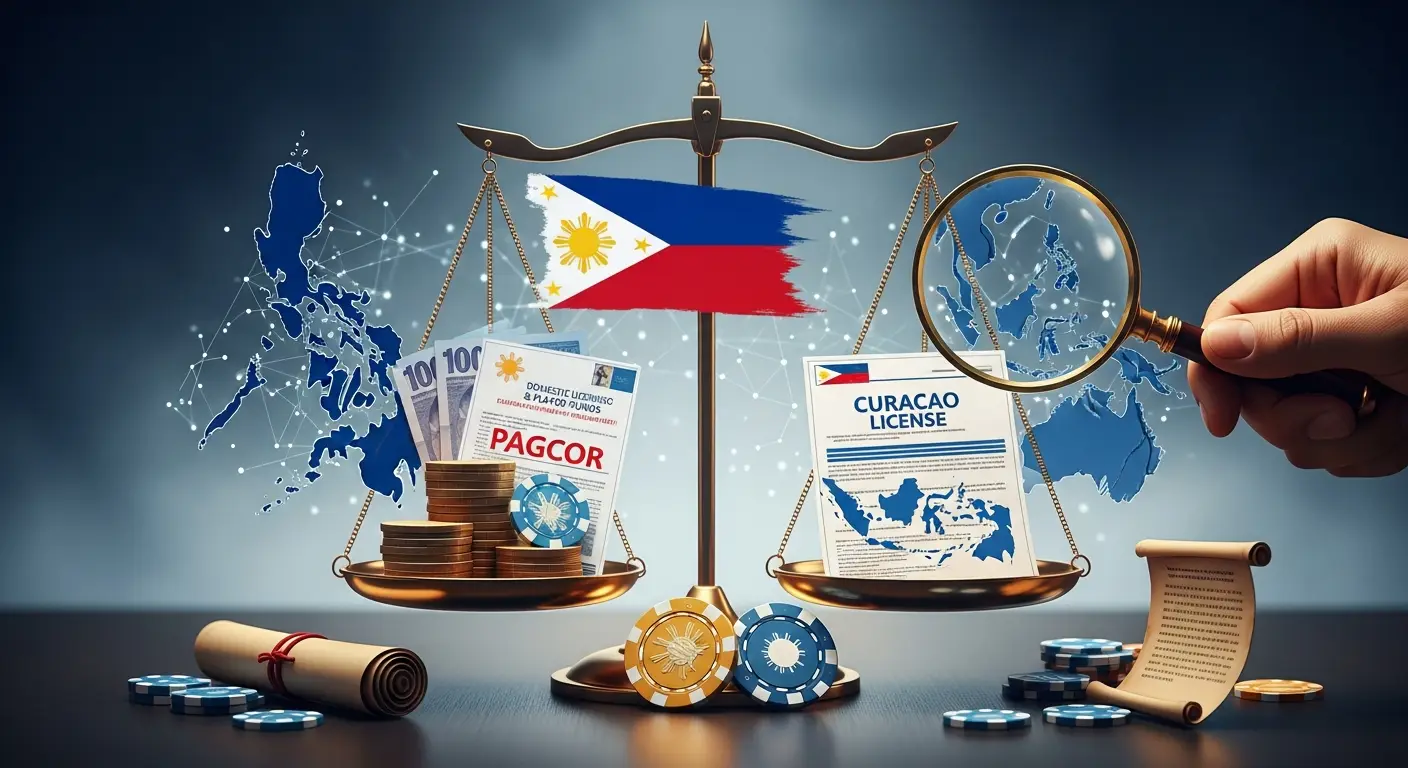
PAGCOR – What It Licenses and How to Verify a Casino
PAGCOR (Philippine Amusement and Gaming Corporation) operates under Presidential Decree No. 1869, as amended by Republic Act No. 9487. It licenses land-based casinos and, through its Electronic Gaming Licensing Department, the local electronic gaming operations that offer eCasino games, eBingo, sports betting, specialty games, online poker and numeric games. It also runs its own Casino Filipino branches. Licensees must verify players, keep under-21s out and follow the Responsible Gaming Code of Practice.
To verify a platform, use the documents on the PAGCOR regulatory site: the list of registered brands and domain names of licensed casinos, the list of accredited gaming system administrators and their domains, and the security seal verification page. PAGCOR also publishes quarterly Philippine gaming industry data there for anyone who wants to follow the market.
CEZA Licenses – Why They Do Not Cover Filipino Players
CEZA (Cagayan Economic Zone Authority) and other economic zone and freeport authorities used to license offshore gaming aimed at players outside the Philippines. Those licences never allowed betting by players in the Philippines. Under the Anti-POGO Act of 2025, all offshore gaming licences previously issued by PAGCOR, special economic zone authorities, TIEZA, freeport authorities and other agencies are permanently revoked, and their power to issue such licences is removed.
A site advertising a CEZA or other zone licence as proof it is lawful for Filipino players is making a misleading claim. The same applies to foreign licences from Curaçao or Anjouan: they are not PAGCOR authorisation, and Executive Order No. 13 (2017) treats gambling conducted outside the licensing authority’s territorial jurisdiction as unlawful gambling.
The Anti-POGO Act of 2025 and What Changed
President Marcos signed Executive Order No. 74 on 5 November 2024, ordering the immediate ban of Philippine offshore gaming operators (POGOs), internet gaming licensees (IGLs) and other offshore gaming, with operations to cease by 31 December 2024. The Anti-POGO Act of 2025 (Republic Act No. 12312), signed on 23 October 2025, made the ban law and repealed Republic Act No. 11590, the 2021 law that had taxed POGOs.
The Act prohibits offshore gaming in the Philippines, the acceptance of offshore bets, acting as a POGO service or content provider, running POGO hubs and using POGO gaming equipment. A first offence carries six to eight years’ imprisonment plus a fine set by the court, and repeat offences carry up to twelve years and fines of up to PHP 50 million. POGOs served players abroad, so the ban does not create any new route for Filipinos to play: domestic online gaming remains limited to PAGCOR-supervised platforms.
Payments changed too. In August 2025 the BSP ordered supervised e-wallets to remove in-app links to online gambling platforms within 48 hours. Senators have since called for wider restrictions on gambling payments, so check PAGCOR’s announcements for the current rules before you play.
Taxes on Casino Winnings – The 20% Rule
Under Section 24(B)(1) of the National Internal Revenue Code, as amended by the TRAIN Law (Republic Act No. 10963), a final tax of 20% applies to prizes above PHP 10,000 and to “other winnings” derived from sources within the Philippines. The exemption for winnings of PHP 10,000 or less applies specifically to PCSO sweepstakes and Lotto, not to casino winnings in general.
How the tax is collected on a particular casino or online win depends on the product and on BIR rules, so ask the operator how it handles withholding and check with the Bureau of Internal Revenue or a licensed tax professional if you have a significant win. Winnings at unlicensed offshore sites bring their own problems: there is no local operator to deal with withholding, and no regulator to help if the site refuses to pay at all.
Playing at a Philippine Online Casino on Mobile
The Philippines is a mobile-first market, and most online gaming platforms are designed for phones first. The practical choice is between a mobile browser and a native app, and the main safety rule is the same for both: only use the official domain listed by PAGCOR.
Native App vs. Mobile Browser – Which to Use
Native apps can load faster, support biometric login and push notifications, and may perform better on slower connections. The browser requires no installation and works on any device. For most players, the browser version of a PAGCOR-listed domain is the simplest and safest choice.
Push notifications are designed to bring you back to play. If you install an app, consider turning notifications off and using your phone’s screen-time tools to limit how long the app can be open each day.
Downloading Casino Apps in the Philippines
Be cautious with casino apps distributed as APK files or through links sent by chat. Installing an APK means allowing apps from unknown sources, which bypasses the app store’s checks, and fake casino apps that copy real brands are a known way to steal log-in details and money.
If you want an app, download it only through a link on the operator’s own domain after you have matched that domain to PAGCOR’s published list, or from an official app store listing that names the same operator. If a site only offers an APK from a third-party file host, use the browser instead.
Data Usage for Slots, Live Casino, and Crash Games
Standard slots and RNG table games are light on mobile data once loaded. Live dealer games stream video continuously and use far more data, with consumption rising with the stream quality. Crash games are lightweight by design despite their real-time nature.
For live casino on mobile data, lowering the video quality in the platform settings reduces data use considerably with little visible impact on a small screen. Your phone’s own data counter, reset at the start of a session, is the most accurate way to see what a particular game uses.
How to Start Playing at a Philippine Online Casino
Starting at a lawful online casino in the Philippines takes a little longer than signing up at an offshore site, because identity checks come first. That is the point: the checks protect you.
Step 1 – Choose a Casino and Register
Pick a platform whose brand and exact domain appear on PAGCOR’s list of registered brands and domain names, then type that address into your browser yourself. Avoid search engine ads and links sent by text or chat. Click Register or Sign Up and give your full legal name, date of birth, a valid email address and a mobile number in your own name. You must be 21 or older.
Step 2 – Complete KYC Before Your First Deposit
Complete identity verification straight after registering rather than waiting until your first withdrawal. Upload a government-issued photo ID such as a PhilSys national ID, driver’s licence or passport, plus a selfie holding the document if asked. Use well-lit photos with all four corners of the ID visible; blurry or cropped images are the most common cause of delays. Approval times vary by operator.
Step 3 – Deposit via GCash and Claim Your Bonus
Go to the cashier and choose one of the payment methods the platform currently offers, which may or may not include GCash after the BSP’s 2025 order. Use an account in your own name and deposit only the amount you set aside for this session.
Before depositing, read the bonus terms on the operator’s own promotions page and decide whether you want a bonus at all. Some bonuses apply automatically and lock your balance under wagering rules; if you would rather keep your deposit free to withdraw, decline the offer before you pay.
Step 4 – Pick the Right Game for Your Session Budget
Match your first game to your budget and session goal. For PHP 500: a low-volatility slot at PHP 10 per spin gives 50 rounds. Baccarat at PHP 50 per hand on the Banker bet gives 10 hands. Live roulette at PHP 25 on even-money bets gives 20 rounds. Use demo mode first if the platform offers it, and set a deposit limit in your account settings before you play.
Responsible Gambling
Gambling is entertainment with a cost, the house edge applied over time. Treat that cost the same way you would any other leisure expense: as a fixed amount set aside for the experience, not as money you expect to grow. Gambling in the Philippines is for adults aged 21 and over.
Set a session budget before you start and keep it in a separate wallet. PAGCOR’s Responsible Gaming Code of Practice applies to gaming establishments and online platforms, and PAGCOR offers self-exclusion and family exclusion through its responsible gaming page. Use deposit limits before you need them, not after a bad session.
If gambling is affecting your finances or relationships, free and confidential help is available:
- National Problem Gambling Helpline (NPGH): landline (02) 824 89568, a 24/7 service run by PAGCOR and Seagulls Flock Organization
- NCMH Crisis Hotline: 1553 or 1800-1888-1553, for anyone in immediate mental health crisis
- Gam-Anon Philippines: support for families and friends, hotline 0995 110 1327
- Gambling Therapy: free international online support and forums
External References
- PAGCOR official website: https://www.pagcor.ph
- PAGCOR Electronic Gaming Licensing Department: https://www.pagcor.ph/regulatory/cegs.php
References
- PAGCOR: List of registered brands and domain names of licensed casinos
- PAGCOR: Responsible gaming, persons prohibited from gambling, self and family exclusion
- Republic Act No. 12312, Anti-POGO Act of 2025
- Executive Order No. 74 (2024), ban on offshore gaming
- Executive Order No. 9 (2022), continued suspension of e-sabong
- Republic Act No. 10963 (TRAIN Law), final tax on prizes and winnings
- The Philippine Star: BSP orders e-wallets to remove online gambling links (15 August 2025)
- National Problem Gambling Helpline
Frequently Asked Questions
Is online casino gambling legal in the Philippines?
Only through operators supervised by PAGCOR, the Philippine Amusement and Gaming Corporation. PAGCOR licenses land-based casinos and, through its Electronic Gaming Licensing Department, online platforms tied to licensed gaming venues. Offshore gaming is banned under Executive Order No. 74 (2024) and the Anti-POGO Act of 2025, and foreign licences such as Curaçao or Anjouan do not authorise any site to serve players in the Philippines.
What is the minimum gambling age in the Philippines?
The minimum age is 21. PAGCOR's responsible gaming rules prohibit persons under 21 from entering and playing at gaming establishments, and PAGCOR-supervised online platforms check age through identity verification at sign-up. Government officials and employees, members of the armed forces and police, and people on the National Database of Restricted Persons are also barred from playing.
Which Philippine online casinos accept GCash?
There is no fixed list. In August 2025 the Bangko Sentral ng Pilipinas ordered supervised e-wallets, including GCash and Maya, to remove in-app links to online gambling platforms, and both said they would comply. Whether a PAGCOR-supervised platform accepts a given e-wallet in its own cashier is up to the operator and can change, so check the cashier of a platform listed by PAGCOR, and never send money to a personal number or agent.
What is the best welcome bonus at a Philippine online casino in 2026?
The best bonus is one with terms you can realistically meet, not the largest headline. Read the operator's own promotions page for the wagering requirement, game contribution, expiry and any cap on winnings, and only consider offers from platforms whose domain appears on PAGCOR's published list. Offshore sites are not on that list, so there is no Philippine regulator to enforce their terms.
How do I check if a Philippine online casino is legitimate?
Type the web address yourself, then compare the brand and exact domain with PAGCOR's list of registered brands and domain names of licensed casinos on the PAGCOR regulatory site. Check any security seal on PAGCOR's seal verification page. If the domain is not listed, the seal cannot be verified, or the site asks you to pay into a personal account or offers play without ID checks, do not deposit.
What is the difference between PAGCOR and a Curacao license?
PAGCOR is the Philippine government regulator. Its licensees are supervised in the Philippines, must verify players, keep under-21s out and follow the Responsible Gaming Code of Practice, and players can take complaints to PAGCOR. A Curaçao licence is issued abroad and gives no authority to offer gambling to people in the Philippines. A Curaçao-licensed site is not on PAGCOR's lists, is outside PAGCOR's exclusion programme, and leaves players with no local regulator if it refuses to pay.
What are the most popular casino games among Filipino players?
Baccarat is a long-standing favourite at Philippine casinos, and online platforms also carry slots, blackjack, roulette, live dealer tables, crash games such as Aviator, fishing games and e-bingo. On PAGCOR-supervised platforms the game content must come from approved providers. Online sabong is different: electronic sabong remains suspended nationwide under Executive Order No. 9 (2022), so sites offering it to players in the Philippines are operating outside the rules.
Can I play at a Philippine online casino on my phone?
Yes. PAGCOR-supervised platforms are generally built for mobile browsers, and some offer apps. Use the browser version of a domain listed by PAGCOR, or download an app only through a link on that official domain or an official app store listing that names the same operator. APK files sent through chat or hosted on third-party sites are a common route for fake casino apps that steal log-in details and money.

Marta Cutajar is an experienced iGaming and sports betting writer with over 7 years of experience in the online gambling industry. She has written extensively for major online casinos and sports betting sites, covering betting guides, casino reviews, and regulatory updates.