
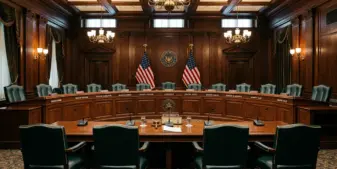
Congress has turned its attention to US sports gambling regulation, with the Senate Commerce and Technology Committee scheduling a hearing to examine the rapid expansion of sports betting and its impact on game integrity.
The committee, chaired by Sen. Ted Cruz, convened the hearing as lawmakers on both sides of the aisle express concern that leagues and sportsbooks are not doing enough to protect the integrity of play or the welfare of athletes. The scrutiny follows a cluster of high-profile corruption cases spanning professional and college sports.
An NBA point-shaving scandal last fall produced federal charges against current and former players linked to leaked injury information. Major League Baseball recently suspended two pitchers charged with manipulating ball and strike outcomes to benefit gamblers. The NCAA, meanwhile, is investigating athletes at smaller college basketball programs for allegedly taking bribes from bettors. NBA officials have already met with a congressional committee to discuss the gambling probes that produced those indictments.
The college environment has drawn particular attention. Texas Tech quarterback Brendan Sorsby, who was slated to earn $5 million in NIL money this fall, checked into rehab for gambling addiction earlier this year. Critics point to the $1.26 billion DraftKings and FanDuel spent combined on advertising last year as a driver of the culture surrounding cases like Sorsby’s. Both operators spent approximately $1 million each on lobbying in Washington, D.C. over the same period.
The post-2018 regulatory landscape – opened up by the Supreme Court’s Murphy v. NCAA ruling striking down PASPA – has left 38 states plus Washington, D.C. operating under widely varying frameworks, a fragmentation that underpins the push for federal standards. States continue to roll out legal markets under their own rules, reinforcing the case some lawmakers make for a federal floor on integrity and consumer protections.
Cruz said: “Fans shouldn’t have to wonder if their favorite player missed a buzzer-beater or dropped a touchdown pass because of a secret bet. Unfortunately, recent episodes have planted that seed of doubt and raised questions about whether changes are necessary to integrity in sports.”
Jennifer Hoekstra, a corporate personal injury attorney litigating cases against major gambling companies, said: “The analytics and the AI that are underlying this, they know who the problem gamblers are, but they don’t take enough steps to limit individuals who are gambling either far outside their means or at all hours because that’s the way they’re making money.”
The SAFE Bet Act, introduced last year by Sen. Richard Blumenthal and Rep. Paul Tonko, would establish minimum federal standards to curb predatory practices in online sports betting. It has yet to gain legislative traction. NBA commissioner Adam Silver has previously called for stricter federal gambling regulation, a position that aligns with the direction several lawmakers now appear to be moving. The SCORE Act, which addresses college sports eligibility and NIL reform and is backed by President Trump, could reach the House floor this week.

Petra Vanhoof has spent the better part of a decade following the shifting tides of gambling regulation across Europe and beyond. She came up through the compliance side of the industry before pivoting to writing, which gives her a grounded, no-nonsense perspective on the rules, loopholes, and political maneuvering that shape how operators actually do business. She is particularly drawn to the gap between what regulators say and what the market ends up doing in response.