

Kalshi users between the ages of 18 and 21 have traded an estimated $5.4 billion so far this year on the prediction market, with $3.9 billion of that volume tied to sports-related event contracts, according to a CNN analysis cited by Fortune. The figures land at the centre of a widening dispute over whether Kalshi’s sports contracts function as regulated financial derivatives or as unlicensed sports gambling that should be restricted to users 21 and older.
Kalshi permits trading from age 18 because it operates as a market regulated by the Commodity Futures Trading Commission rather than a state-licensed sportsbook. Sports gambling in most states is unavailable to anyone under 21, creating what critics describe as an access gap the platform’s federal classification allows it to sidestep. That classification question remains contested and unresolved, as detailed in ongoing coverage of the federal courts’ split on Kalshi’s status.
What the Contracts Look Like
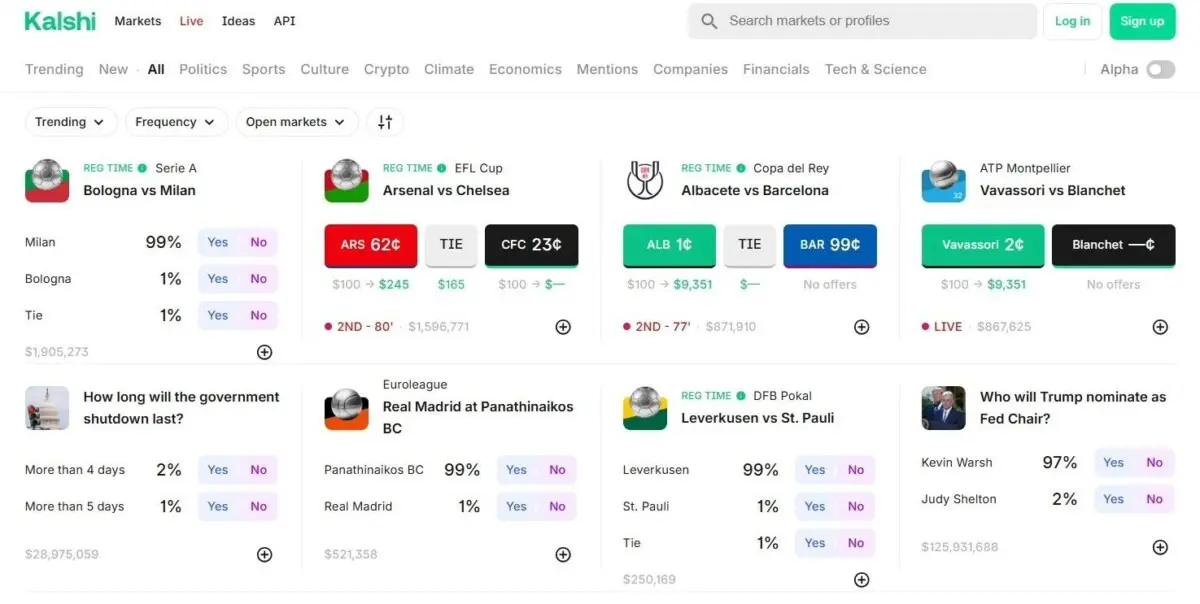
On Kalshi, users buy yes-or-no event contracts and are matched against another user holding the opposite position, with the platform paying out only the side that predicted correctly. Sports contracts range from whether a team wins a single game to whether it reaches a championship, and users can build “combo” positions that function much like a parlay bet, paying out only if every leg lands.
New York is separately suing to shut down Kalshi, alleging it operates an unlicensed gambling platform, a case that ties directly into broader state pushback covered in reporting on gambling-classification injunctions against the company. Kalshi did not immediately respond to Fortune’s request for comment on the under-21 trading figures.
Nevada Ruling and Wider Pressure
A Ninth Circuit ruling has allowed Nevada to apply state law to Kalshi’s sports-related event contracts, effectively blocking the company from offering them in the state unless it complies with Nevada gaming law – a development that echoes the geofencing and compliance issues detailed in prior coverage of Kalshi’s Nevada market-access problems. Separately, a coalition of 44 state attorneys general has argued that the CFTC’s proposed prediction-market rules exceed the agency’s authority and intrude on states’ traditional power to regulate sports gambling.
Kalshi has maintained it should not be regulated like a sportsbook, telling Connecticut lawmakers earlier this year that it does not set odds, act as a counterparty, or profit from customer losses – testimony filed while opposing a bill that would have raised the platform’s minimum trading age to 21. That bill did not pass.
A Kalshi spokesperson told CNN that users aged 18 to 21 account for just 3.14% of the company’s overall trading volume. Les Bernal, national director of Stop Predatory Gambling, told Fortune the design of prediction markets mirrors video-game mechanics aimed at young, impressionable users, echoing concerns raised in an April peer-reviewed paper in Science about the addictive potential of continuous-trading architectures.
Source: Fortune, reporting on a CNN analysis, published August 31, 2026.

When he is not analysing the latest compliance updates or dissecting quarterly operator results, Florian follows Bundesliga football closely and maintains a healthy skepticism toward anyone claiming to have cracked a winning betting system. He brings a grounded, insider-aware perspective to his writing and is always more interested in the structural story behind the headline than the headline itself.